The paper industry in India creates more than just notebooks and packages; it also supplies essential livelihoods to many people. The sector struggles with a critical problem because it must manage increasing energy consumption while reducing carbon emissions rapidly. It is possible to unite efficiency with environmental sustainability through a single method. BESS serves as the transformative technology that will change how Indian paper mills function. Battery energy storage systems operating in the Indian market serve as the foundation for emission reduction initiatives that generate better profit margins.
The Imperative for Greener Papermaking
The global push toward sustainability has placed industries under a microscope; paper production is no exception. For Indian mills, transitioning to greener practices isn’t just an environmental obligation—it’s an economic necessity to stay competitive in a rapidly evolving market.
- High Energy Demand in Paper Production
Paper manufacturing is energy-hungry. Grinding pulp, drying sheets, and running machinery require uninterrupted power, often sourced from fossil fuels or unstable grids. For Indian mills, frequent outages and peak tariff spikes further strain budgets. The result? Soaring operational costs and unpredictable downtime.
- The Carbon Footprint Challenge
Every stage of paper production emits CO₂, from raw material processing to wastewater treatment. With India’s paper industry contributing significantly to industrial emissions, decarbonisation isn’t just a buzzword—it’s a survival strategy. Global climate agreements and domestic policies like the National Mission on Enhanced Energy Efficiency (NMEEE) are tightening the screws, pushing mills to adopt cleaner practices.
- Market and Regulatory Pressures for Sustainability
Consumers and investors alike now demand transparency in sustainability. Brands using eco-certified paper gain loyalty, while laggards risk losing contracts. Simultaneously, mandates like Renewable Portfolio Standards (RPS) require industries to source a %age of their energy from renewables. Non-compliance? Penalties and missed opportunities.
Introducing Battery Energy Storage Systems (BESS)
For decades, Indian industries have relied on outdated energy practices that strain both budgets and the environment. Today, innovation offers a smarter path forward—one where energy storage isn’t just a backup plan but a strategic tool for sustainability and growth.
- What is BESS, and How Does it work?
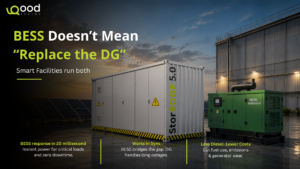
An ESS (Battery Energy Storage System) is a high-capacity power reservoir. It stores electricity—from the grid or renewables—when supply exceeds demand and discharges it during shortages or peak hours. Systems like those designed by Good Enough Energy Pvt. Ltd leverages cutting-edge lithium-ion technology for rapid charging, scalability, and longevity, making them ideal for industrial applications.
- Why BESS is a Game-Changer for Industrial Energy Use
Imagine slashing grid dependency while optimising energy costs. Battery energy storage systems in India enable just that. By storing cheaper off-peak power or surplus renewable energy, mills can avoid peak tariffs, reduce the use of diesel generators, and maintain seamless operations. This isn’t just innovation for an industry with razor-thin margins—it’s a financial lifeline.
How BESS Enables Decarbonization in Paper Mills
Decarbonising paper mills might seem daunting, but BESS provides a practical pathway to balance productivity with planetary responsibility. By addressing energy inefficiencies and reducing reliance on fossil fuels, this technology unlocks a cleaner, more cost-effective future for the industry.
- Maximising Renewable Energy Integration
While solar or wind energy can power mills, their intermittent nature often forces reliance on fossil fuels. Here’s where Bess India Solutions shines. By storing extra solar energy generated during the day, BESS ensures uninterrupted clean power at night or during cloudy periods, allowing mills to meet their RPO targets without compromising productivity.
- Reducing Reliance on Grid Fossil Fuels
India’s grid still depends heavily on coal. With a battery energy storage system, mills can draw less from the grid during high-carbon evening hours. Instead, stored clean energy powers operations, directly cutting Scope 2 emissions.
- Optimising Energy Use During Peak Carbon Intensity Hours
Grid power’s carbon footprint fluctuates—higher during peak demand and lower at night. BESS allows mills to intelligently schedule energy use, drawing stored power during high-emission periods and charging when the grid is cleaner. This isn’t just smart energy management—it’s a strategic emissions cut.
The “Cleaner Energy” Advantage: Environmental Benefits
Adopting battery energy storage systems in India isn’t just about compliance—it’s about responsibility. By enabling round-the-clock clean energy use, BESS helps mills:
- Slash CO₂ emissions by reducing fossil fuel dependency.
- Minimise waste through precise load management.
- Support India’s net-zero goals while enhancing brand reputation.
For an industry historically tied to resource-intensive practices, this shift is transformative.
The “Stronger ROI” Advantage: Financial & Operational Benefits
Let’s cut to the chase: sustainability must make business sense. With Bess India Solutions, the financial perks are undeniable:
| Benefit | Impact |
| Lower Energy Costs | Avoid peak tariffs; reduce grid reliance |
| Reduced Downtime | Uninterrupted power = consistent output |
| Compliance Savings | Meet RPOS and avoid penalties |
| Long-Term Asset Value | Future-proof against rising carbon taxes |
While initial investment varies, the operational savings and risk mitigation position BESS as a strategic asset. Good Enough Energy Pvt. Ltd specialises in tailoring systems to match mill sizes and needs, ensuring maximised returns without compromising on sustainability.
The Future is Charged: BESS as a Cornerstone for Sustainable Paper
The trajectory is clear: paper mills that decarbonise will thrive. With battery energy storage systems in India, the industry can pivot from energy-intensive practices to efficient, low-carbon operations. This isn’t just about survival—it’s about leading a sector-wide transformation.
Companies like Good Enough Energy Pvt. Ltd are at the forefront, offering BESS solutions that align with India’s industrial and environmental priorities. Their expertise ensures seamless integration, minimal disruption, and long-term reliability.
So, why hesitate? The dual promise of decarbonisation and profitability isn’t a distant dream—it’s within reach. As energy storage technology advances, delaying adoption could mean losing a competitive edge.
Ready to redefine your mill’s energy strategy? Partner with Good Enough Energy Pvt. Ltd to explore how battery energy storage system solutions can power your transition to a cleaner, more profitable future.